I needed to pitch.
Nobody was teaching
people like me how.
So I figured it out myself. A hundred times. In rooms that said no, on stages that challenged me, and in every uncomfortable conversation that cost me something — until the pattern emerged and I built the system I wished had existed when I started.
That system is The Pitch 101.
"Positioning is how you show up, stand out, and separate yourself."
"Your story becomes your distinction."
"Don't ask. Align."
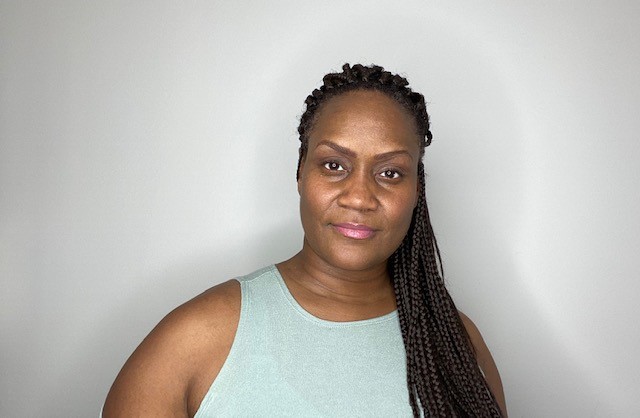
I was working in film and television — writing scripts, developing concepts, pitching to networks and studios and anyone who would give me twenty minutes. I needed to pitch. I looked around for someone who could teach me how. And I kept finding the same thing: most people were faking it till they made it, and nobody was building a real system for people who looked like me.
So I did the only thing that made sense. I pitched 100 times. Some were embarrassing. Some were devastating. A few landed. And every single one taught me something I wrote down.
"The pitches that landed weren't always the best ideas. They were the best stories — delivered by people who knew exactly who they were and why it mattered."
— Squeaky MooreThat insight changed everything. I stopped trying to master the room and started studying what made a pitch resonate — not just in entertainment, but in every room where someone was asking for a yes. I tested frameworks, refined language, and rebuilt my approach from the ground up.
By pitch number 100, I had something more valuable than a greenlit project. I had a methodology. And I had watched it work — not just for me, but for every entrepreneur, student, and professional I began sharing it with.
Nobody was teaching pitch to people who needed it most
Women. People of color. First-gen entrepreneurs. Community builders. The people who were expected to pitch without ever being taught how. The Pitch 101 was built to close that specific gap — and it still is.
100 pitches revealed a system that works in any room
The frameworks that emerged from 100 real pitches don't care what industry you're in. They work for entrepreneurs, students, athletes, executives, and institutions — because the fundamentals of human communication don't change by audience.
A methodology that scales from a classroom to a boardroom
From NYU to BRIC to Morgan Stanley to high school auditoriums in New Jersey — The Pitch 101 methodology has been delivered in every kind of room. The framework holds because it was built on real failure, real feedback, and real wins.
From 100 pitches
to a methodology company.
Empowering people who were expected to pitch
without being taught how.
The Pitch 101 was built to close a specific and persistent gap — the communication gap experienced by women, people of color, first-gen entrepreneurs, and community builders who are expected to compete in funding rooms, boardrooms, and classrooms without ever receiving real pitch training.
This is not a side note to the methodology. It is the reason the methodology exists.
Access to real pitch training
Not a one-size-fits-all presentation skills course. A methodology built on 100 real pitches and designed for the specific communication challenges underrepresented founders face.
Confidence that carries beyond any single pitch
The goal is never to win one room. The goal is to build the confidence and frameworks that make every room after that easier.
A pathway to funding, partnership, and visibility
The pitch is the bridge. The methodology builds the bridge — and teaches you to walk across it in any room, to any audience, with any ask.
Culturally aware, high-impact delivery
The Pitch 101 is built by someone who has been in these rooms. The methodology is not neutral — it is intentional, accessible, and designed to work for the people who need it most.
The methodology, in your hands.
Two ways to take the methodology with you — the origin story and the action tool.
#100Pitches: Mistakes I've Made So You Don't Have To
The book that started everything. 100 real pitches in film and television — every lesson, every pattern, every framework that emerged from the room. Candid, practical, and written for anyone who has ever needed to get into a room and make something happen.
Get the book on Amazon →The Ultimate Pitch Playbook
The methodology in your hands. Tools, templates, and guided exercises to build your pitch from scratch — elevator pitch, presentation deck, verbal pitch, and email pitch — all in one workbook. The how to the book's why.
Get the Playbook →12+ named frameworks.
One operating system.
Every program, workshop, coaching session, and keynote Squeaky delivers runs on the same engine — a suite of named frameworks that address every breakdown point in how people communicate, position, and pitch.
These are not templates. They are thinking tools designed to become muscle memory. The room changes. The framework holds.
Explore the full methodology →Where the methodology has been delivered
What clients have achieved
"Before our sessions I was unclear with our messaging — especially our 'Why.' She helped me articulate our vision in a clear and enticing way. She didn't put words in my mouth — she helped me find the ones already there."
Ready to pitch like
you mean it?
Book a free 20-minute discovery call. We'll figure out exactly where you are, what you're pitching, and which part of the methodology fits your moment.